Posts

Week 8 - Nanotechnology + Art
Image
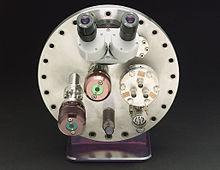
DESMA BLOG – WEEK 8 Nanotechnology + Art This week’s topic about nanotechnology helped to further convince me that science continues to play a key role in creating new forms of art.   Nanotechnology is about the manipulation of matter smaller than 100 nanometers, which is about the same size of a tennis ball in comparison to the earth.  This rapidly growing field took off in the early 1980s and has since been changing the way we approach science, consumer products, and how we treat cancer patients.  In 1981, a scanning tunneling microscope (STM) was developed to view three-dimensional images of samples at the atomic level.  The “age of the immaterial was truly inaugurated” (Gimzewski and Vesna).   In 1986, the first STM was produced for commercial purposes. There are a wide variety of products incorporating nanotechnology that are available to consumers.  Nanoparticles are one of the largest segments in the commercial marketplace today...

Week 7 - Neuroscience + Art

Image
DESMA BLOG – WEEK 7 Neuroscience + Art As a student athlete, I adhere to a fairly strict workout schedule.  Because I’m so physically active throughout the day, I am a deep sleeper and I believe that I dream a lot while I sleep.  I also do yoga and meditate as part of my exercise routine.  I have been curious about neuroscience and how our mind and body interact.  Is it possible to train our brains to alleviate pain?  Can we dictate the outcomes of our dreams while we are dreaming?  According to Mark Wheeler in his article, “How to Build a Bigger Brain”, he states that meditating helps to focus better, strengthen the immune system, and create more control over emotions.  MRI scans of the brain have shown that people who meditate have larger gray matter in their brain.  Additional studies need to be done to determine if regular meditators are developing a specific “wiring” pattern that is creating these differences when compared to non-medita...

Event #2

Image
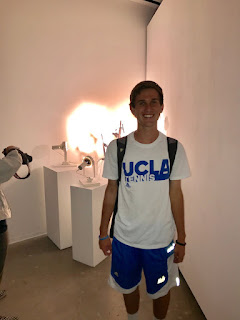
Event #2 U Still Up? By Christina Yglesias I attended Christina Yglesias’ “U Still Up?” art installation at Broad Arts on May 2.  I had an inkling that the exhibit would be focused on texting since the title of the event was written in “text-speak.”  Upon entering the exhibit, I was instantly distracted.  There was a lot of noise coming from different sets of people having conversations on four video screens.  The screens were hanging on each wall.  In addition, there was a stack of papers containing print-outs of thousands of text messages on a table.  Headphones were also available for visitors to listen in on the video conversations.   I did not initially appreciate that this exhibit was a form of art until after I stood in the room for several more minutes.   While my ears were full of noise from the video screens, my eyes were glued to the pages of text messages.  I suddenly realized that this installation was a microcosm ...

Week# #6 - BioTech + Art

Image
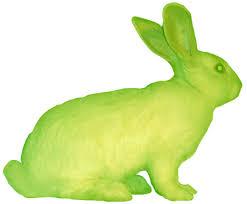
Week #6 – BioTech + Art I have always been curious about biotechnology and its latest developments and scientific breakthroughs.  It never occurred to me that art had a place in biotech but after studying this week’s materials, I am convinced that not only is there a place for it, but there is also a need for it.  Initially, I was impressed after seeing photos of Alba, Eduarco Kac’s transgenic glowing bright green rabbit.  I thought it was cool that an albino rabbit was genetically modified with a green fluorescent protein (GFP) from a jellyfish and that it glowed when illuminated under a specific light.  However, after thinking further, I grew uncomfortable and wondered what other living organisms were undergoing transgenics and being intentionally mutated?  While genetic manipulation can make for some beautiful art, are we going too far?     Alba, the transgenic fluorescent rabbit, was created in 2000 Edward Steichen, a horticulturis...

Ben Goldberg - Midterm Project

https://drive.google.com/file/d/0B03OyVyF8aKgbUpQVEE2UlVaYlE/view?usp=sharing

Weel 4 - Medicine + Technology + Art

Image
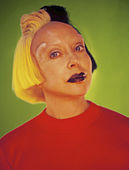
Week 4 - Medicine + Technology + Art I never thought about medicine and technology as being art before, however, after studying the material this week, I realize that medical practitioners are actually artists.  They are constantly studying and staying ahead of the latest trends and innovations in their particular speciality.  Plastic surgeons are artists and their work involves beautifying people on the outside.  Other types of surgeons perform their craft on the inside of bodies and while their work cannot be seen from the outside, a patient can benefit from their work on the inside.   In Orlan’s documentary, she creates “carnal art” by undergoing several plastic surgeries on her own body to demonstrate her beauty.  While I understand this is a form of art, I was quite uncomfortable watching the film because it pushed the boundaries of art. Too much plastic surgery can lead to too much transformation   Another example of medicine and technol...

Event #1

Image
Event #1  April 11th: Design Media Arts graduate solo show - Youjin Cheng  After attending this event, I was able to see how art, technology, and science are closely related (week 1 blog).  This event was hosted by Youjin Cheng, an art student at UCLA, and it was held at the Broad Art Center.  In the middle of the room, there was an xbox controller attached to a couple of long strings which were connected to the main screen in the front of the room.  After reading and writing about the connection of art and technology in week one, it was interesting to see this displayed up close and in person.  Math, technology, and science all played a role in making the artist’s project come to life. Attending this event inspired me to think creatively as it was eye opening to see it first hand.  I thought the layout of the room was quite unique which helped me think outside of the box.  The xbox controller on the top level of the room gave depth to...